

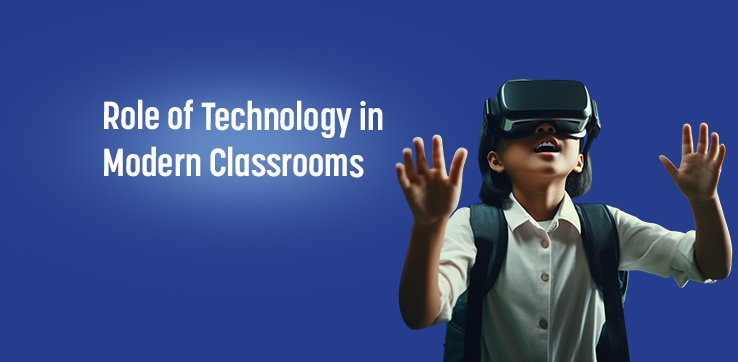
There was a time when children would sit quietly for hours, listening to teachers explain lessons on a blackboard. Learning was mostly one-way, where students simply absorbed what was taught. But today’s generation is different. Their attention span has changed, their way of thinking has evolved, and their expectations from education are no longer the same. They are curious, fast-paced, and visually driven. They don’t just want to listen, they want to experience learning.
In earlier classrooms, even simple concepts like parts of a plant or the human digestive system required teachers to draw diagrams manually on the board. It took time, effort, and a certain level of skill to make those visuals effective. But today, with the integration of modern technology, learning has become quicker, clearer, and far more engaging. This is where technology plays a crucial role in transforming classrooms into dynamic learning spaces.
Saves Time and Enhances Efficiency
One of the biggest benefits of technology in classrooms is its ability to reduce the time needed for school activities. Teachers can present ready-made visuals or slides or videos which save them the time needed to create diagrams and write extensive notes. The available time can be used for explaining and discussing and interacting with others. Schools such as an English medium CBSE school in Karunagappally are increasingly adopting smart boards and digital tools to ensure that teaching time is used more effectively.
Improves Student Engagement
Technology makes learning more engaging through its interactive features. Animated content together with video material and presentation tools helps students maintain their concentration and active participation during learning activities. People find visual content more appealing because it provides better attention results than text or spoken language. Students who participate in learning activities show increased engagement because they ask more questions and remember information for extended periods. The transformation stands out in educational settings that adopt contemporary teaching methods which include the CBSE affiliated school in Kollam.
Enhances Clarity and Understanding
Complex topics become easier to understand when explained through visuals and simulations. For example, instead of imagining how the heart pumps blood, students can watch an animated video that shows the process step by step. This level of clarity was difficult to achieve with traditional methods alone. Technology helps break down complicated concepts into simple, easy-to-understand formats, making learning more effective.
Supports Different Learning Styles
Every student learns differently some are visual learners, some prefer listening, while others learn best through hands-on activities. Technology caters to all these learning styles. Videos, audio lessons, interactive quizzes, and virtual labs provide multiple ways for students to grasp a concept. This inclusive approach ensures that no student feels left behind, making classrooms more balanced and supportive.
Encourages Interactive and Experiential Learning
Modern classrooms are moving beyond textbooks. With tools like virtual reality, simulations, and interactive platforms, students can explore concepts in a more practical way. They can take virtual tours, conduct experiments, and engage in real-life scenarios all from their classroom. This experiential learning builds deeper understanding and keeps students motivated. It is one of the key reasons why many parents prefer institutions like the Best English Medium school in Kollam, where such innovative teaching methods are embraced.
Prepares Students for the Future
Technology in classrooms does more than just improve current learning, it prepares students for the future. In a world driven by digital skills, early exposure to technology helps students become confident, adaptable, and ready for modern careers. It also develops critical thinking, problem-solving, and digital literacy, which are essential in today’s competitive environment.
Conclusion
Education is no longer limited to chalk and board. The modern classroom is a blend of knowledge and experience, where technology plays a vital role in shaping how students learn and grow. While traditional teaching methods laid a strong foundation, integrating technology has made learning more efficient, engaging, and meaningful.
To truly meet the needs of today’s learners, schools must embrace this transformation and ensure that technology is used thoughtfully and consistently. When used effectively, it doesn’t replace teachers, it empowers them to teach better and helps students learn smarter. In the end, the goal remains the same: to create an environment where learning is not just understood, but experienced.
Read more :Why School Infrastructure Matters in Shaping a Child’s Future