

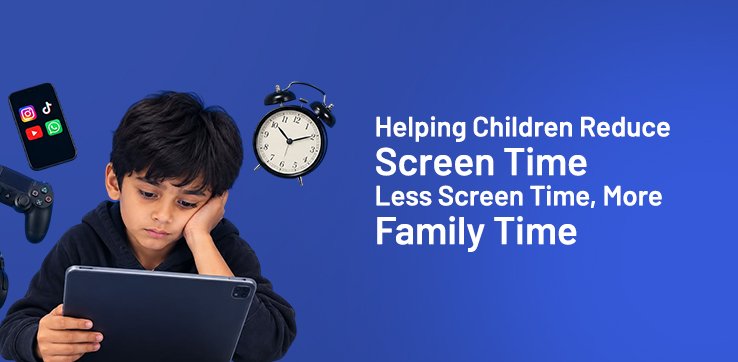
It is almost impossible to find a child today who does not use a screen. Smartphones, tablets, televisions and computers have become part of everyday life, and children are introduced to technology at a very young age. Screens can certainly support learning and provide entertainment, but too much screen time can gradually take away time that children could spend playing, reading, talking, creating or exploring the world around them. The purpose is not to completely remove technology from a child’s life. Instead, children need to understand that screens are only one part of their day, not the centre of it.
How Much Screen Time Should Children Have?
Screen-time needs can vary depending on a child’s age, routine and purpose of screen use. Educational activities, homework and recreational scrolling cannot all be treated in exactly the same way. For younger children, health organisations recommend keeping recreational screen exposure particularly limited and giving priority to physical activity, sleep, play and interaction with family members. WHO recommends no sedentary screen time for children under two and no more than one hour for children aged two to four, with less being better.
For older children and teenagers, parents can create reasonable limits around recreational screen use while paying attention to whether it is affecting sleep, studies, physical activity, hobbies or family time. Setting a limit is useful, but knowing what children are doing on the screen is just as important. Parents should have conversations about the websites, games, videos and social media platforms their children use and keep an eye on what they are experiencing online.
Here are a few simple steps you can take to gradually reduce your child’s screen time and encourage healthier, screen-free habits.
1. Talk to Your Child and Make a Simple Plan
Start with a conversation instead of suddenly taking the device away. Ask children what they use their phones or tablets for and explain why the family wants to reduce unnecessary screen time.
Create a simple routine together. Decide when screens are allowed and when they need to be put away. Homework, meals, family conversations and bedtime can become screen-free periods. When children understand the reason behind a rule, it becomes easier for them to follow it.
2. Keep Them Busy With Things They Enjoy
A child who is asked to stop using a phone without being given anything interesting to do will probably ask for the phone again within minutes.
Give them alternatives that match their interests. Colouring, painting, drawing, crafts, puzzles, board games and other creative activities can keep their hands and minds occupied. Parents can also participate instead of simply giving children an activity and walking away. Sometimes, a little time spent creating something together can be more valuable than another hour of digital entertainment.
3. Take Their Interests Outdoors
Outdoor time becomes easier when it is connected to something children already enjoy.
If a child loves cricket, take them to practise. If they enjoy football, find a nearby ground. Swimming, cycling, gardening and martial arts can also become regular activities. Children who enjoy these activities are less likely to feel that they are simply being forced away from a screen. Even a short walk can be a beginning. Start with around 30 minutes outside and gradually increase it. A visit to the playground is another simple way to give children something enjoyable to do away from their devices.
4. Keep Phones and Tablets Out of the Bedroom
A device kept beside a child’s bed can easily become a source of late-night entertainment. Keeping phones, tablets and other recreational devices outside the bedroom creates a clear boundary between screen time and sleeping time. Parents can also establish a fixed time when every device in the house is put away for the night. Following the same routine every day makes it easier for children to accept it.
5. Create Phone-Free Spaces at Home
Choose certain situations where screens are not part of the routine. Family meals are a good place to start. When everyone puts their phones away, children get more opportunities to talk, listen and participate in family conversations. Parents should also follow the rule. Children notice what adults do far more than what adults tell them to do.
6. Give Children Small Responsibilities
Children do not need a screen every time they say they are bored.
Give them small responsibilities at home. They can arrange their books, organise their room, water plants, help with simple household tasks or spend time gardening. These activities may seem ordinary, but they teach children that free time can be used for doing, learning and helping. Gardening is particularly useful because children can watch something they planted grow over time. It gives them a reason to step outside and be involved in something real.
7. Make Reading a Daily Habit
Books can become one of the best alternatives to recreational screen time.
Let children choose stories, comics, picture books or other age-appropriate books that genuinely interest them. Reading can support vocabulary, language development, concentration and imagination. More importantly, when reading becomes a habit during childhood, it can remain a familiar and enjoyable activity as children grow older. Parents can make this easier by setting aside a few minutes every day for reading rather than treating it only as an academic activity.
8. Give Children More Real-World Experiences
One of the strongest ways to reduce dependence on screens is to give children more opportunities to experience life outside them. Children need opportunities to perform, compete, create, communicate, play and work with others. Arts programmes, sports, exhibitions, seminars, stage performances, creative activities and school events can all provide these experiences.
At St. Gregorios School, students are encouraged to participate in a wide range of extracurricular activities and programmes. They get opportunities to be part of on-stage and off-stage programmes, arts activities, exhibitions and other creative experiences. Different national days, special days and important occasions are also celebrated, allowing students to learn through participation and experience rather than only through textbooks.
This kind of exposure is particularly valuable because children discover that there are many enjoyable things to do beyond a phone or tablet.
The Importance of Non-Screen Time
A child’s day needs a healthy mix of activities. Time spent outdoors, reading, playing, helping at home, talking with family and participating in activities gives children experiences that cannot be replaced by scrolling through a screen.
Physical activity is especially important during childhood. WHO recommends that children and adolescents aged 5–17 get an average of at least 60 minutes of moderate-to-vigorous physical activity each day across the week. Non-screen time also gives children space to become curious. They can ask questions, make mistakes, solve problems, create things and interact with people around them. These experiences help them develop interests and confidence in ways that passive screen consumption cannot provide.
Making Screen-Free Time a Normal Part of Childhood
Reducing screen time does not have to become a daily battle between parents and children. It can begin with small changes. Keep devices away during meals. Spend some time outdoors every day. Read together. Encourage hobbies. Give children simple responsibilities. Let them participate in sports, arts and creative activities.
Most importantly, parents need to be realistic and consistent. Children will not suddenly stop asking for screens. But when their days are filled with interesting people, activities and experiences, they gradually have more reasons to put the screen down.
As the best CBSE affiliated school in Kollam St. Gregorios School takes a huge role in creating these opportunities by giving students experiences that extend beyond regular classroom lessons. Extracurricular activities, sports, arts, exhibitions, seminars, on-stage programmes and celebrations of different national and special days give students opportunities to participate, interact and learn from the world around them.
Let’s Learn Beyond the Screen
St. Gregorios School, recognises that a child’s education does not end when the textbook is closed. Children need opportunities to explore their interests, express themselves and take part in experiences that develop them beyond academics.
Through arts, sports, exhibitions, reading activities, creative programmes, on-stage events, seminars and celebrations of different national and special days, students get opportunities to participate rather than simply observe. These experiences help make school life more active and meaningful while giving children more reasons to discover the world beyond their screens. A healthy childhood is not about completely avoiding technology. It is about making sure there is enough life happening outside the screen.